
In my 12-year sentence of grade school, I remember most days spent in the back of the classroom, quiet. Thoughts racing, half-listening to the teacher, but more so focused on drawing and creative writing—the most eloquent way I can express myself. I was an eccentric child, misunderstood at best, and did not see the purpose in going to school.
That is, until I met some teachers that actually understood me. Teachers that took the time to observe my idiosyncrasies, accept my unconventional style, encourage my love for art and all creativity, challenge me to speak up more, and change my perspectives on education altogether. Some teachers I will never forget.
It is despairing to think that many kids—myself included—disregard school and learning because it has been presented in an unimaginative manner consisting of lecture, response to (or should I say regurgitation of) lecture, and memorizing answers moments before a standardized test. Most students are only interested in earning a good grade—an imaginary, highly subjective letter or percentage that they have been conditioned to think denotes one’s collective intelligence and determines one’s future. They care more about getting a good grade than actually learning something new. Standardized tests do not accurately measure one’s intelligence, as we are all unique learners. Individual needs of students should be recognized and taken into account, starting in kindergarten.
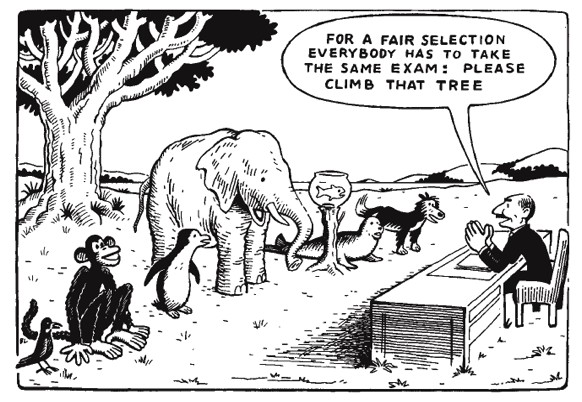
I would like to revolutionize my students’ opinions about learning, and create an environment where students come in everyday eager and excited to learn. It is through the application and practical knowledge of these learning theories such as differentiation and positive reinforcement that I can make this happen.
Differentiation reminds one that kids each have a unique and beautiful mind, and students come to learn the same concepts in different terms. Hypothetically speaking, standardized tests are a great form of measurement; realistically speaking, there are a multitude of other ways to measure students’ different strengths and skills. For example, an outgoing, charismatic, and confident student may best demonstrate his knowledge in a presentation; on the other hand, a withdrawn, artistic student would be more suited to a creative project. In order to reach out to more students, standardized tests should be less emphasized and a better system of positive reinforcement should be implemented. Furthermore, a broader range of topics—especially those on the creative side—should be instigated.
In the first impressionable years of school, kids learn best through much positive reinforcement. Positive reinforcement is a subset of operant conditioning where one is rewarded for his or her good behavior. I use positive reinforcement with my class of kindergarteners frequently. At the end of every day, I pick two “Star Students” that get a prize, and I allow the kids who have had good behavior all day to have a set time of free play on the playground. At such a young age, kids need to be encouraged and affirmed constantly; for example, instead of pointing out what one kid is doing wrong, I will instead draw attention to those who are following instructions. I may say, “I love the way that Cassidy is sitting quietly,” and then notice many of the other kids mimic this good behavior. Teaching kindergarteners is not an easy job; everlasting patience, undying optimism, ability to take charge and a willingness to adapt are necessary. At this age, it is important to not be too hard on them.
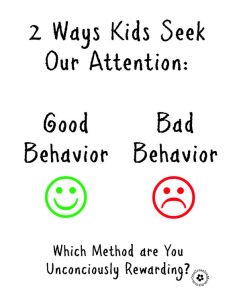
Undoubtedly, a teacher strives for the whole class to succeed; however, individual needs of a student should not be overlooked. In my own practice, I want to create an environment where every student is actively engaged and learning, but in their own way. Education should not center on a letter grade. School should be a place where children feel comfortable to be themselves and have the opportunity to showcase their talents and strengths. All it takes is getting to know the students individually, loving on them and encouraging them always to pursue their passions.
 Cultivate a Kindergarden